Drop the Script: What Happens When 'Being Real' Stops Being Real

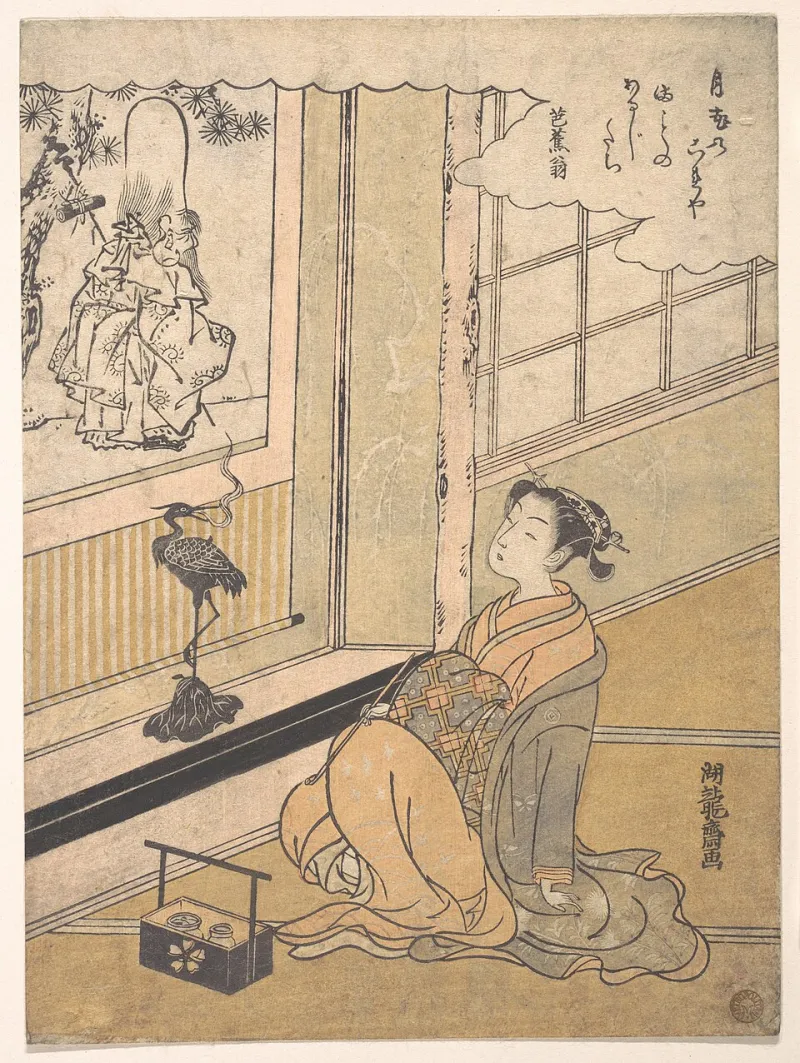
Photo: "Cultural Heritage Inventory of Bangladesh (CHIB), Cultural Heritage Hub of Bangladesh (CHIB)", CC0, via Wikimedia Commons
There's a specific kind of fatigue setting in right now. You can feel it in the comment sections, in the discourse, in the way people are quietly muting their once-favorite creators. It's not burnout exactly. It's something closer to secondhand exhaustion — the kind that comes from watching someone perform sincerity for the forty-seventh time this month.
We are deep inside what you might call the authenticity recession. The cultural currency of being real has been so thoroughly inflated, so relentlessly minted and circulated, that it's starting to feel worthless. And the uncomfortable truth that nobody in your feed is saying out loud? The persona didn't go anywhere. It just learned to cry on camera.
How We Got Here
Backtrack about a decade and the dominant mode of aspirational content was polish. Everyone was curating their highlight reel — vacations in Santorini, perfectly plated açaí bowls, bodies that looked like they'd never encountered a gas station hot dog. The backlash was inevitable and, for a minute, genuinely refreshing. People started showing the mess. The therapy sessions. The crying-in-the-car moments. The unfiltered skin.
That was real. For a moment, it cracked something open.
But then the brands noticed. Then the algorithms rewarded it. Then the crying-in-the-car became a content format with its own production rhythms — good lighting, a hook in the first three seconds, a call to action buried somewhere near the emotional climax. Vulnerability got a media kit. Authenticity got a brand deal. And suddenly everyone was performing the not-performing with the same calculated precision they used to apply to the perfect flat lay.
This is where we live now. In the uncanny valley of realness.
The Mask That Claims It Has No Face
Here's the paradox that's making everyone quietly unwell: the more someone insists they're showing you the real them, the more you start to wonder what's behind that insistence. Because actual authenticity — the kind that's genuinely unguarded — doesn't usually announce itself. It doesn't come with a caption that says "no filter, no agenda." It just is.
The cultural theorist Erving Goffman wrote about this decades ago — the idea that all social interaction is essentially performance, that we're all managing impressions, all the time, in every context. We play different versions of ourselves at Thanksgiving versus at a bar versus in a job interview. That's not inauthenticity. That's being a functional human person navigating a complex social world.
What the authenticity era did was convince an entire generation that this normal, universal experience of self-presentation was something shameful to be overcome. That the goal was radical, unmediated self-expression — the self with no audience, no context, no shaping. Which, if you think about it for more than thirty seconds, is not actually possible the moment you hit record.
The Exhaustion Is the Point
So where does that leave us? In a weird place, honestly. The people who feel most culturally exhausted right now aren't the ones who were always performing — they've adapted fine. The ones struggling are the people who genuinely tried to drop the script, who put real, unmanaged pieces of themselves into the digital ether, and then watched those pieces get flattened into content. Get responded to with parasocial familiarity. Get screenshot and shared out of context.
Being actually vulnerable in public is terrifying. Being performatively vulnerable is a career. And the market has gotten very good at producing the latter while calling it the former.
This is the authenticity recession in action: the genuine article has been priced out by its own knockoff.
The Power Move Nobody's Talking About
So what's the move? What does cultural intelligence look like in a moment when sincerity has been so thoroughly strip-mined?
Honestly? It looks like acknowledging the game.
The most interesting voices right now — in essays, in podcasts, in the corners of the internet that haven't fully been colonized by the content machine — are the ones who are willing to say: yes, I'm performing. Yes, I'm presenting a version of myself shaped by context and audience and what I think you need from me in this moment. And that doesn't make what I'm saying less true. It makes it honestly true.
There's something almost radical about that admission. In a landscape where everyone's competing to be the most unfiltered, the most raw, the most devastatingly real, saying I'm wearing a mask and so are you, and that's actually fine is genuinely countercultural.
What Comes After Authentic
The pendulum is already swinging. You can see it in the renewed appreciation for camp, for artifice, for the kind of over-the-top stylized self-presentation that doesn't pretend to be anything other than what it is. You can see it in the way younger audiences are gravitating toward performers and creators who are openly, unapologetically constructed — who treat their public persona like a character they're playing with full awareness and a wink.
This isn't cynicism. It's actually a more sophisticated relationship with identity. The idea that there's one true self underneath all the masks, waiting to be revealed, is kind of a myth anyway. We're all composite creatures — shaped by our environments, our audiences, our histories. The self is collaborative and contextual, not fixed and pure.
The authenticity era told us the masks were the problem. What comes next might be the realization that the masks are the art. That the interesting question isn't "who are you really" but "which version of you is showing up right now, and why, and what does that choice say about what you value?"
That's a more honest conversation. And probably a more interesting one.
We're not done performing. We're just, maybe, getting a little more honest about the fact that we're performing. Which is, in its own weird way, the most authentic thing we've managed to pull off in years.