Alone and Thriving: How Solitude Became the Most Expensive Thing You Can Buy
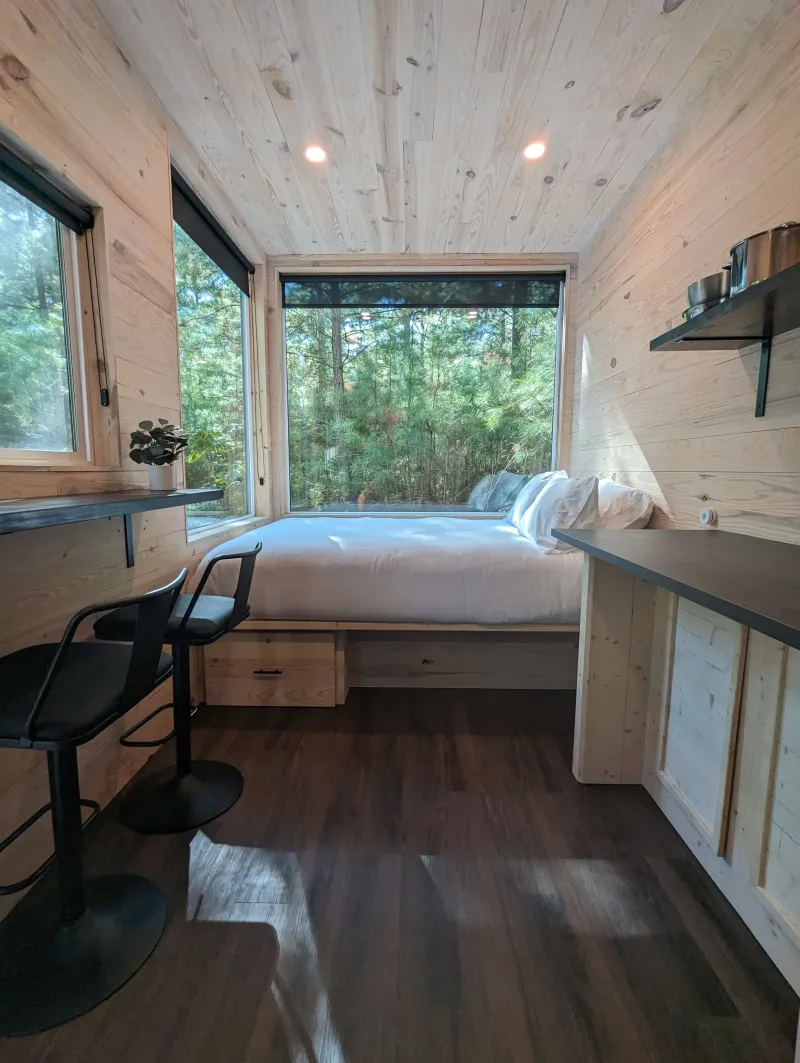
Photo: person alone luxury cabin solitude minimalist interior peaceful, via tranquilcabins.com
There's a hotel in the Catskills that books out weeks in advance. No spa. No rooftop bar. No curated playlist humming through the lobby. The big selling point? A single-occupancy cabin, a journal, and a strict no-social-media check-in policy. Rates start at $400 a night.
It's always sold out.
We are living through a strange cultural inversion. For decades, luxury meant more — more people, more access, more noise dressed up as experience. Bottle service. Group yacht charters. Festival VIP wristbands that got you closer to the crowd. But something shifted, quietly and then all at once, and now the most aspirational thing you can signal to the world is that you've fully left it.
Welcome to the loneliness premium.
The Price Tag on Peace
Solo travel has always existed, but what's happening now is different. We're not talking about the backpacker-hostel energy of a gap year or even the independent-woman-finds-herself narrative from a mid-2000s memoir. This is structured, monetized, aggressively marketed solitude — and it costs accordingly.
Luxury travel brands like Six Senses and Amangiri have quietly expanded their solo-traveler packages, offering single-occupancy suites (at near-double-occupancy prices, naturally) with itineraries built entirely around inward-facing activities. Silent meditation mornings. Private forest bathing guides. Dinners for one served by candlelight with a curated reading list instead of a dinner companion.
Meditation and wellness apps got there first, of course. Headspace and Calm collectively pulled in hundreds of millions in revenue last year largely by selling the idea of mental quiet to people who are chronically overstimulated. But the market has evolved well past an app. Now there are analog retreats charging $2,000 to $5,000 for a long weekend with no phone, no Wi-Fi, and no one asking you how your weekend was.
Therapists are noticing the shift too. "I have clients who describe their solo retreat trips the way previous generations described a honeymoon," says one New York-based therapist who works primarily with millennial professionals. "It's this sacred, private experience they've been saving up for and protecting. It means something to them on a deep identity level."
Burnout Dressed Up in Linen
Let's be real about what's actually driving this. Burnout culture isn't new, but its current form is particularly vicious. The pandemic blurred every professional boundary that existed, remote work collapsed the architecture of the workday, and social media turned leisure time into content production. There is no longer a clean line between being alive and being perceived.
For a generation that grew up online — that has essentially been performing themselves in public since middle school — the idea of existing in a space where no one is watching is genuinely radical. It's not just relaxation. It's a form of reclamation.
And reclamation, historically, is something people pay for.
The irony is rich, though. The same millennials and Gen Zers booking silent retreats are the ones who will document the whole thing on Instagram when they get back. The aesthetic of unplugging has become its own content genre — the grainy film photo of the empty trail, the single coffee cup by the frost-covered window, the caption about "coming home to yourself." Solitude, once you've experienced it, becomes a thing you perform having had.
This is not a criticism. It's just the world we live in. Authenticity and its performance have become indistinguishable, and the market has adapted accordingly.
Single-Pod Architecture and the New Luxury Blueprint
The hospitality industry is paying attention. Pod hotels, which originally emerged as budget-friendly options in urban centers, have undergone a dramatic aesthetic rebrand. Companies like Zoku and Muji's hotel concepts have repositioned the single-occupancy room not as a compromise but as a curated choice — smart, minimalist, intentional.
In Japan, capsule hotels have always carried a certain cult appeal, but American adaptations are pushing the concept upmarket fast. New boutique properties in cities like Austin, Nashville, and Portland are designing rooms specifically sized for one — not cramped, but concentrated. Every detail calibrated for a single person's experience. The bathroom built for one body. The reading nook that fits one chair. The menu designed for a table of one without the awkward social contract of dining solo in a restaurant built for couples.
It's architecture as permission slip.
What Disconnection Actually Signals Now
Here's the real cultural text beneath all of this: in a hyper-connected economy, the ability to disconnect is a class marker.
The people who can't afford to be unreachable — hourly workers, gig economy laborers, anyone whose income depends on immediate availability — don't get to romanticize solitude. Being off the grid is a privilege dressed up as a spiritual practice. And the wellness industry, which has always been extraordinarily good at monetizing things that used to be free (water, walking, breathing), has found its newest frontier.
That doesn't make the desire less valid. Burnout is real. The psychological toll of constant connectivity is real. The hunger for genuine quiet, for an hour or a weekend that belongs entirely to you, is one of the most human things there is.
But it's worth sitting with the paradox: we have built a world so loud, so relentless, so algorithmically optimized to keep us engaged, that we now pay enormous sums of money to escape it temporarily — and then return to it, slightly restored, ready to produce again.
The loneliness premium isn't really about loneliness. It's about sustainability. It's the cost of maintaining a self in a culture that would prefer you be a consumer.
The Takeaway (Or: Go Touch Grass, Expensively)
If you're saving up for a solo trip somewhere quiet — a cabin in Vermont, a desert wellness retreat in Sedona, a single-occupancy room with blackout curtains and a do-not-disturb sign — we're not here to talk you out of it. The urge is legitimate and the need is real.
Just know what you're buying. You're not purchasing peace. You're renting it, briefly, from a system that profits from your exhaustion. The market for solitude exists because the market for noise created the demand.
Maybe that's okay. Maybe it's enough to take the weekend, put the phone in the drawer, and exist — quietly, expensively, gloriously alone — for 48 hours.
Just don't forget to post about it when you get back.