The Less List: How Owning Almost Nothing Became the Loudest Flex in the Room
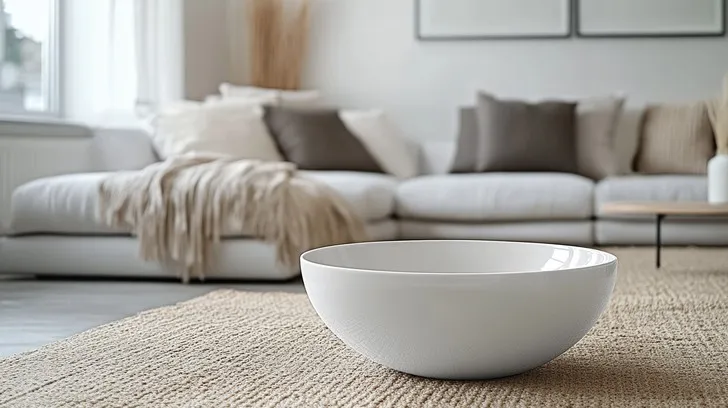
Photo: minimalist apartment interior empty white shelves ceramic bowl natural light, via images.stockcake.com
There's a particular kind of apartment that keeps appearing on your feed lately. White walls. One ceramic bowl. A single plant that looks like it was selected by committee. No clutter, no chaos, no evidence that a human being with impulse buys and Amazon subscriptions actually lives there. And yet, somehow, it reads as the most aspirational space you've ever seen.
This is not an accident.
The shift from more to less as a status signal has been building for years, but something crystallized recently — especially among affluent millennials and the older edge of Gen Z. Accumulation, once the universal shorthand for success, started feeling embarrassing. Not in a Buddhist monk kind of way. More like a cultural recalibration, where the person who owns three perfect things quietly outranks the person who owns three hundred okay ones.
The Psychology of the Edited Life
Here's what's actually happening under the surface: scarcity, when it's chosen rather than imposed, signals control. And control, in a world that feels like a content avalanche with no off switch, is genuinely rare.
When someone curates their possessions down to the essentials — a single Le Creuset pot, one really good leather bag, a wardrobe that fits in a carry-on — they're communicating something that no haul video ever could. They're saying: I've done the work of knowing what I actually want. That's not a small thing. Most people haven't.
Psychologists who study consumer behavior have long noted that decision fatigue is real and exhausting. The average American makes thousands of micro-choices every day. Against that backdrop, the person who has already eliminated unnecessary decisions reads as someone operating at a different altitude. There's a reason the Steve Jobs black turtleneck story never gets old. It's not about the turtleneck. It's about the implication that his mental bandwidth was too valuable to spend on what to wear.
The difference now is that this logic has filtered down from tech billionaires into the broader cultural conversation — and it's gotten a lot more aesthetic in the process.
Quality as the New Quantity
Spend any time in the corners of the internet where taste is taken seriously — the slow fashion Reddit threads, the independent bookstore Instagram accounts, the ceramics collectors on Substack — and a pattern emerges. The conversation is always about the one right thing rather than the accumulation of options.
This is where the flex gets interesting, because it requires a specific kind of access to pull off. Owning less only works as a status symbol when what you own is genuinely good. A single pair of $400 Japanese selvedge denim jeans signals something entirely different than a single pair of fast fashion knockoffs. The empty shelf only reads as intentional when the one object on it was chosen with care and, usually, with money.
That's the uncomfortable truth at the center of this whole aesthetic: the ability to own less is itself a privilege. When you've already met your needs — when you're not shopping out of necessity or filling emotional gaps with retail therapy — then the choice to stop acquiring becomes a luxury behavior dressed up as restraint.
None of this means it's inauthentic. It just means the "less is more" gospel hits differently depending on your zip code.
The Collector Who Collects Nothing
What's fascinating about this moment is that the most coveted identity isn't the collector of rare sneakers or vintage art or first-edition books. It's the person who could collect any of those things and has chosen not to. The negative space is the collection.
Call them the quiet collectors. They have the taste to know what's good, the restraint to pass on what's merely fine, and the financial cushion to wait for what's right. Their homes feel considered rather than decorated. Their wardrobes feel intentional rather than assembled. They don't shop; they acquire, occasionally, after serious deliberation.
This is a complete 180 from the conspicuous consumption that defined status signaling for most of the 20th century. The Veblen goods — the visible logos, the stacked jewelry, the walk-in closets full of options — still exist and still sell. But the cultural conversation has moved. Among a specific, highly influential demographic, the logo is almost gauche now. The empty wall is the statement.
Why It Went Mainstream (Sort Of)
Marie Kondo sparked something when she told America to ask whether their belongings sparked joy, but the minimalism conversation has evolved well past decluttering. What started as a self-help framework became an aesthetic became a social signal became, now, a whole identity category.
Social media accelerated it in a counterintuitive way. The more content we're all drowning in, the more a spare, quiet, deliberate feed stands out. An Instagram grid of ten beautifully shot objects reads as more sophisticated than a hundred product shots. The restraint is the content.
There's also a generational exhaustion factor. Millennials grew up watching their parents accumulate — houses, cars, stuff — and then watched a lot of that disappear in 2008. Gen Z grew up in the aftermath, already skeptical of the promise that more equals better. The minimalist flex isn't just aesthetic for them; it's also a quiet rejection of a consumption model that demonstrably didn't deliver on its promises.
The Part No One Wants to Admit
Here's the thing that gets glossed over in the glossy minimalism content: living with less requires having had enough to begin with. The person who has purged their apartment down to a capsule wardrobe and a few good books got there from somewhere. They're not starting from scarcity — they're choosing it, and there's an enormous difference.
The aesthetic of intentional emptiness is beautiful. The philosophy of choosing quality over quantity is genuinely worth something. But it's worth being honest about who gets to participate in this particular flex and who doesn't.
That said, the underlying impulse — to slow down, to choose carefully, to stop letting the algorithm decide what you want — is one that crosses income brackets. The version looks different depending on your budget, but the instinct to stop accumulating reflexively and start choosing deliberately? That's available to everyone.
What It Actually Takes
The real work of the less-is-more life isn't the purging. It's the ongoing practice of not filling back up. Resisting the sale, the trend, the limited drop. Knowing what you have well enough to know what you don't need. That's harder than it sounds in a country where shopping is practically a leisure activity and every brand has a loyalty program designed to keep you engaged.
The quiet collectors make it look effortless, which is, of course, the whole point. The empty shelf doesn't advertise the discipline it took to keep it empty.
But that discipline is the status signal now. Not the shelf itself — the choice to leave it bare.