The New Luxury Is Making Things Harder for Yourself on Purpose
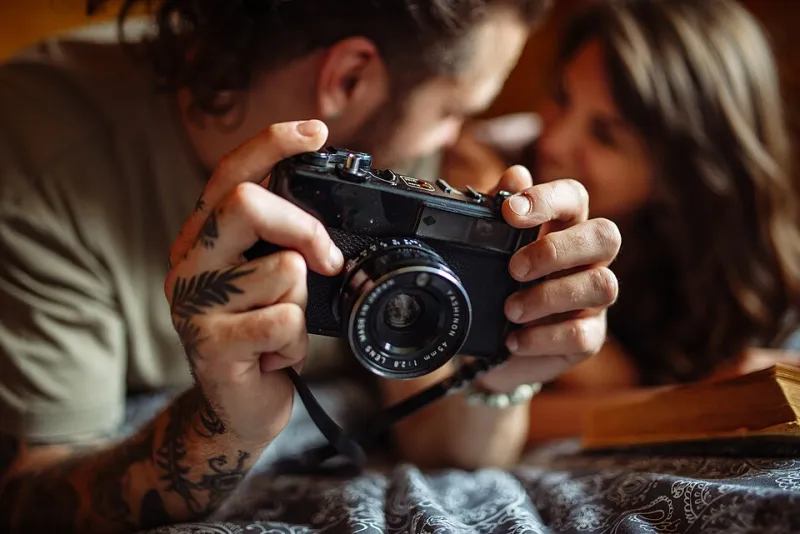
Photo: Shixart1985, CC BY 2.0, via Wikimedia Commons
At some point — nobody can pinpoint exactly when — convenience stopped being aspirational. The people with the most cultural and financial capital started quietly opting out of the instant-everything economy, not because they couldn't afford the easy version, but precisely because they could. Friction, it turns out, is the new thread count.
Welcome to analog luxury. Where the status symbol isn't the thing you have — it's the deliberately inefficient way you obtained or created it.
The Friction Economy
For most of modern consumer history, the dream was frictionlessness. Same-day delivery. Contactless payment. Pre-filled forms. Skip the line. Automation wasn't just a convenience — it was aspirational. If you had money, you had time saved. That was the exchange.
But something flipped. When frictionlessness became available to essentially everyone with a smartphone and a Prime membership, it lost its cachet. The ultra-convenient experience is now the default experience. And default, by definition, isn't luxury.
So the cultural upper class — which in 2025 means a mix of old money, creative industry insiders, and the kind of tech-adjacent people who have strong opinions about both their espresso and their carbon footprint — started reintroducing friction. Deliberately. Expensively.
Think: handwritten correspondence on heavy cotton paper. Film photography, complete with the 10-to-14-day wait for development. Bespoke tailoring that requires four fittings over six months. Sourdough from a 100-year-old starter. Vinyl records ordered from a shop in another state. The point isn't the outcome — it's the process, and the fact that the process takes time.
Why Slowness Signals Wealth Now
Here's the economic logic underneath the aesthetic: time is the one resource that can't be scaled. You can outsource almost anything. You cannot outsource actually living your life slowly.
When someone chooses to spend a Saturday afternoon developing film instead of editing iPhone shots through a filter app, they're signaling something real: that they have the luxury of an unscheduled Saturday afternoon. That they're not hustling through their weekend. That they can afford — literally and figuratively — to do things the long way.
The sociologist Thorstein Veblen identified "conspicuous leisure" as a status signal back in 1899, and the concept has never been more relevant. Except now, the leisure is disguised as craft. The idleness looks like intention. You're not wasting time — you're honoring the process.
Film photography is maybe the clearest example of this in the style world. A single roll of 35mm film, developed and scanned, can easily run $30 to $50 in a major U.S. city — and that's before the cost of the camera or the time investment of actually learning to shoot manually. Compare that to the $0 it costs to take 400 photos on your phone and delete 390 of them. Film is objectively more expensive, slower, and less forgiving. That's exactly why it's back.
The Handwritten Letter as Power Move
Nothing says "I have arrived" in 2025 quite like receiving a handwritten note from someone who matters. Not a card from the drugstore — actual stationery, fountain pen, wax seal if they're really committed. The whole production.
This is deliberate communication as status flex. In a world of Slack messages and voice memos and three-second text replies, the decision to sit down, write something by hand, address an envelope, and mail it communicates an enormous amount of information without saying any of it directly. It says: I have time. I have taste. I think you're worth this. And because the recipient knows how rare that is, the message lands with a weight that no perfectly worded email can match.
Brands in the luxury space have caught on. High-end retailers and boutique hotels are bringing back handwritten notes, hand-addressed mailers, and personalized correspondence not because it's efficient — it absolutely is not — but because the inefficiency is the message. It signals that a human being touched this. That it wasn't automated. That you were seen.
In an era of AI-generated everything, the proof of human effort has become a differentiator.
Craft Culture and the Patience Premium
The analog luxury trend shows up everywhere once you know to look for it. In the ceramics and glassblowing classes that are now sold-out status activities in cities like Brooklyn, Portland, and Austin. In the resurgence of hand-bookbinding, letterpress printing, and natural dyeing. In the artisan spirits movement, where small-batch producers charge triple what mass-market brands cost and lead with the story of how long and hard the process was.
There's a patience premium built into all of it. The waiting list for a custom pair of shoes from a small-batch cobbler. The six-month cure time on a charcuterie that a food influencer is very serious about. The knife forged by a single craftsperson in rural Vermont that takes fourteen weeks to deliver. The wait is part of the value proposition — it proves the thing can't be rushed, can't be scaled, can't be faked.
This is where analog luxury diverges sharply from regular luxury. A Hermès Birkin is expensive and exclusive, yes — but it's still a finished product you receive. Analog luxury asks you to participate in the difficulty. To earn the thing through your own patience, attention, or physical effort. The calluses are the point.
The Quiet Flex Nobody's Talking About Loudly
What makes this whole movement interesting is how understated it is. Nobody who's deep in analog luxury is making content about it — or if they are, they're doing it in a way that feels incidental rather than promotional. The film photographer isn't posting a reel about why film is superior. The letter writer isn't documenting their wax seal process for TikTok. The guy with the sourdough starter isn't... okay, the sourdough guy might be posting about it. But you get the idea.
The restraint is part of the signal. Loud consumption is for people who need to be seen consuming. Quiet, slow, analog consumption is for people who've already been seen — or who've made peace with not needing to be.
For the style-conscious crowd, this creates a new kind of aspiration. Not the aspiration to own more or better things, but the aspiration to slow down enough to actually use them. To write the letter. Develop the roll. Take the class. Wait for the thing.
In a culture that's been optimized within an inch of its life, choosing the inefficient path isn't just a lifestyle preference. It's a quiet, very expensive, deeply intentional act of rebellion.
And it's never looked better.