Calendars Are for Peasants: How Doing Absolutely Nothing Became the New Rich-Person Flex
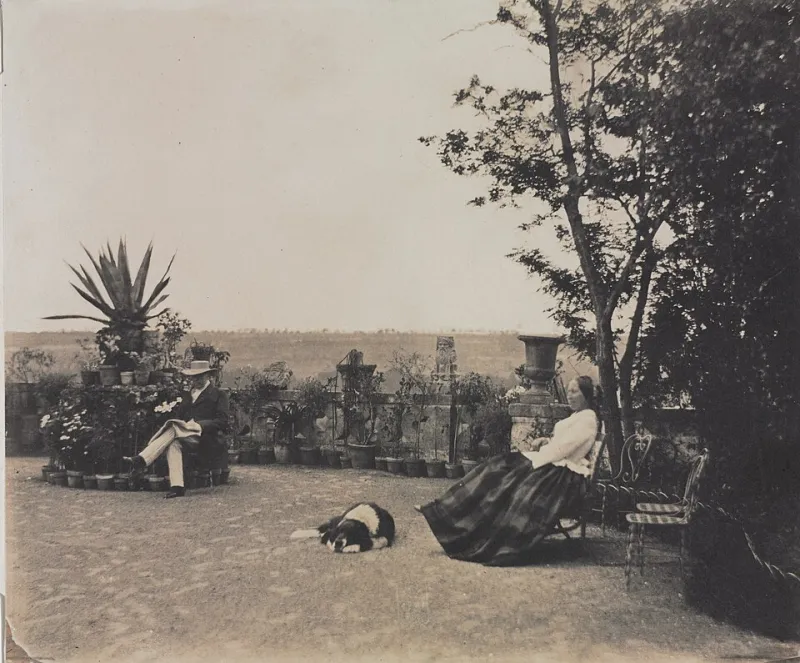
Photo: Louis Pierre Théophile Dubois de Nehaut, CC0, via Wikimedia Commons
There is a woman on your For You page right now. She's sitting in a linen chair somewhere in upstate New York or coastal Portugal, staring at a window. There is chamomile tea. There is soft light. There is absolutely nothing happening, and she wants you to know about it.
Caption: just existing today 🌿
Fifteen thousand likes.
Welcome to the boredom economy — where the most coveted thing money can buy isn't a bag or a vacation or even a wellness membership. It's an empty Tuesday. It's the audacity of an unscheduled afternoon. It's the radical, flex-coded act of having absolutely nowhere to be.
The Hustle Hangover Is Real
For about a decade, we worshipped at the altar of busy. The 5 a.m. alarm. The side hustle. The 'sleep when you're dead' energy that Gary Vee practically built a media empire on. Productivity was a personality, and your Google Calendar was your report card.
Then something cracked.
Maybe it was the pandemic. Maybe it was collective burnout reaching a kind of cultural critical mass. Maybe it was the slow, dawning realization that being exhausted and broke while performing ambition online was, in fact, not the move. Whatever the trigger, the pendulum swung — and it swung hard.
Now the aesthetic isn't the grind. It's the deliberate, photographed, socially distributed absence of one.
Boredom as a Luxury Product
Here's the thing about doing nothing: it costs a lot.
Free time — genuine, unstructured, no-alarm free time — is one of the most class-coded things that exists. When you're working two jobs, managing a family on a tight budget, or hustling through the gig economy just to cover rent, your hours are not your own. Boredom is not an option. Every gap in the schedule is an opportunity to earn, to catch up, to survive.
So when someone posts a three-part Instagram story about their 'slow morning' — the French press, the journaling, the dog walk with no destination — what they're actually communicating is: I can afford this. Not the coffee. The time.
This is why the 'doing nothing' aesthetic has become such efficient status signaling. It doesn't require showing a price tag. It doesn't need a designer logo in frame. The emptiness IS the flex.
The Rise of the Nothing Retreat
The wellness industry — never one to miss a monetization opportunity — caught on fast.
Across the country, a new category of high-end retreat has emerged that sells, essentially, permission to be bored. These aren't spas with massages and fitness classes packed into every hour. These are places where the whole point is that nothing is scheduled. You sit. You walk. You stare at a lake. You resist the urge to optimize.
Some of these experiences run $500 to $1,500 a night. Others are week-long immersions in 'unstructured rest' that cost more than most Americans' monthly rent. The marketing language is thick with words like spaciousness, presence, and radical stillness — which is a very expensive way to say you're paying someone to let you do nothing in a beautiful room.
And people are buying it. Eagerly. Because in a culture that has commodified every waking moment, the idea of buying your way OUT of productivity feels genuinely transgressive. Revolutionary, even.
It is neither of those things. But it feels that way, and feelings are what this economy runs on.
The Paradox Nobody Wants to Talk About
Here's where it gets uncomfortable: the performance of boredom is exhausting.
Posting about your slow morning takes effort. Curating the aesthetic of effortlessness — the right light, the right mug, the right caption that sounds casual but lands with weight — is labor. Documenting your unscheduled afternoon for an audience of thousands is, by definition, a scheduled activity.
The people most publicly 'doing nothing' are often doing quite a lot. They're building a brand around stillness. They're monetizing the aesthetic of rest. They're working hard to appear like they've stopped working — which is, when you really sit with it, the most hustle-culture thing imaginable.
It's the same engine, just wearing different clothes. Instead of posting your 4 a.m. gym selfie, you're posting your 11 a.m. linen-draped nothingness. The goal is identical: to signal a version of yourself that other people want to be.
Gen Z Knows, and Doesn't Care
To be fair, a lot of younger people are aware of the irony. Gen Z in particular has a high tolerance for holding contradictions — they can see through the performance and participate in it simultaneously, which is a very specific kind of cultural sophistication.
There's a chunk of the internet that's actively mocking the 'that girl' and 'soft life' aesthetics even while consuming them. Memes about 'girlies who post their chamomile tea like it's an achievement' coexist with the chamomile tea posts themselves. The joke and the sincerity live in the same feed.
But even the self-aware version of the boredom flex still requires a certain baseline of security. You have to be comfortable enough — financially, emotionally, professionally — to joke about doing nothing. The irony is still a privilege.
What Actually Doing Nothing Looks Like
Real boredom — the kind that isn't content, that isn't aesthetic, that isn't performed — is actually kind of uncomfortable. Psychologists have been saying for years that we're terrible at sitting with unstructured time. Studies show people will choose mild electric shocks over being left alone with their thoughts for fifteen minutes. Boredom, genuine boredom, is a state most of us flee from compulsively.
Which means the 'doing nothing' that's all over your feed isn't really nothing. It's something. It's a carefully constructed identity statement about the kind of person you are or want to be — someone free, unhurried, above the noise.
And that's fine. Aspirational culture has always worked this way. We've always wanted to look like the version of ourselves with more time, more money, more ease.
It's just worth noticing that we've found a way to make even rest into a competition. Even boredom into a benchmark. Even the absence of productivity into its own relentless, exhausting kind of hustle.
The Only Real Flex Left
If you actually want to opt out of the performance — not just the hustle, but the counter-hustle, the aestheticized stillness, the whole churning machine of it — the move is probably the same one it's always been.
Close the app. Don't post the tea. Let the afternoon be ugly and unlit and unwitnessed.
Boredom that no one sees is the only kind that's really free. Everything else is content.