The Algorithm Ate Itself: What Actually Drives Culture Now That TikTok Trends Are Over
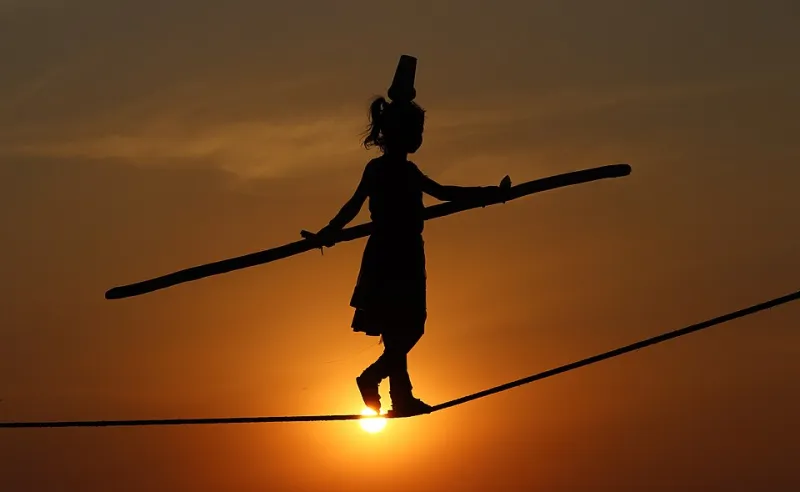
Photo: Derivative work: IamMM, Original: Manir Dhabak, CC BY-SA 4.0, via Wikimedia Commons
Remember cottagecore? Coastal grandmother? Dark academia? The balletcore moment that somehow lasted an entire year and then vanished like it never happened? If you're already exhausted just reading that sentence, you understand exactly why we're here.
The TikTok trend machine — that relentless, frictionless conveyor belt of aesthetics, microtrends, and 48-hour cultural obsessions — is breaking down. Not because TikTok is going anywhere (though the regulatory drama certainly isn't helping its cultural authority), but because the audience it built has finally gotten bored of being programmed.
And what's filling the void is way more interesting than anything the algorithm ever served up.
The Trend Cycle Ate Itself
Here's the thing about manufacturing cultural moments at scale: eventually the audience figures out the machine. And Gen Z, who are essentially the most media-literate generation to ever exist, figured it out faster than anyone expected.
The aesthetics that exploded on TikTok between 2020 and 2023 followed a pattern so predictable it became a meme unto itself. Something niche surfaces. Creators pile on. Brands identify it. Fast fashion drops a collection. The original community abandons it. The trend gets declared dead on the same platform that birthed it. Repeat every three weeks, forever, until everyone is exhausted and nothing means anything.
"The cycle compressed so aggressively that trends stopped having time to actually mean something," says cultural critic and writer Dominique Osei, who covers fashion and digital culture. "When something goes from underground to overexposed in two weeks, there's no cultural weight to it. It's just noise."
The burnout is real and it's measurable. Search interest in named microaesthetics has been declining. The comment sections on trend-forecasting content are increasingly full of people saying some version of I don't care anymore. That's not apathy — it's a form of resistance.
Hyperlocal Is the New Viral
So if the algorithm isn't setting the agenda, what is? The answer is deeply unglamorous and also kind of beautiful: actual communities, in actual places, doing actual things.
There's a growing movement — if you can even call something so decentralized a movement — toward hyperlocal style and culture. The kids who are genuinely shaping what's cool right now aren't broadcasting to millions of followers. They're regulars at a specific record store in Bushwick. They're part of a running club in Chicago's Logan Square that has an inexplicably good collective wardrobe. They're the people who show up to every underground show in Silver Lake and have developed a visual language entirely specific to that scene.
This stuff doesn't go viral. That's the point.
"The most interesting fashion is happening in places the algorithm can't easily monetize," says trend forecaster and consultant Jess Yamamoto. "Small scenes, physical spaces, communities built around shared values rather than shared aesthetics. It's slower. It's more durable. And it's genuinely harder to co-opt."
The resurgence of physical spaces as cultural incubators is part of this story. Independent bookstores, record shops, community gyms, farmers markets with cult followings — these are the places where actual cultural exchange is happening right now, and they're producing style ecosystems that feel earned rather than manufactured.
The Backlash Against Performing Authenticity
There's a particular irony at the heart of the TikTok era: a platform that relentlessly rewarded "authenticity" ended up producing some of the most performative content in the history of social media. The get ready with me video, the day in my life vlog, the confessional talking-head format — all of it trained a generation to present themselves as authentic while following a highly codified set of conventions about what authentic looked like.
The backlash to that performance is now a defining cultural undercurrent. People are actively suspicious of content that seems too polished, too self-aware, too on-trend. The influencer industrial complex — which built an entire economy on the premise that you could trust someone's recommendations because they seemed like a real person — is facing a legitimacy crisis it may not fully recover from.
"There's a fatigue with the parasocial relationship model," says Dominique Osei. "People got burned too many times by creators who turned out to be brand deals all the way down. Now there's genuine cultural cachet in being the person who doesn't have a following. The person who just has taste."
This is producing some genuinely strange new hierarchies. Private Instagram accounts with three hundred followers and no monetization have more cultural influence in certain circles than creators with half a million. Substack newsletters written for a few thousand readers are shaping aesthetic conversations that never touch mainstream social media. Discord servers and group chats are where the actual tastemaking is happening.
Niche Communities Are Running the Show
If you want to understand where culture is actually moving right now, you have to be willing to go looking for it — because it's not going to come find you on your FYP.
The communities quietly setting the next wave span a genuinely eclectic range. The underground rave and electronic music scene, particularly in cities like Detroit, Chicago, and New York, has always had its own visual language, and it's currently producing some of the most interesting fashion thinking happening anywhere. The growing American interest in cycling — not just as exercise but as a full lifestyle and aesthetic — is generating a whole universe of functional-meets-stylish dressing that has nothing to do with any named TikTok aesthetic. Niche sports, from padel to roller derby to Brazilian jiu-jitsu, are creating their own micro-style ecosystems.
What these communities share is that they're built around doing something rather than looking like something. The style emerges from the activity, the shared experience, the physical space. It can't be easily replicated by someone who just wants the aesthetic without the context.
"That's the key shift," says Jess Yamamoto. "The most resonant style right now is legible as belonging. You can tell who's actually part of a scene versus who's cosplaying it. That distinction matters more than it has in years."
So What Does This Mean for the Rest of Us?
If you're waiting for a clean replacement for the TikTok trend cycle — a new platform, a new format, a new algorithm to tell you what to care about — you might be waiting a while. The current cultural moment is explicitly resistant to that kind of centralization.
What it offers instead is something more demanding and more rewarding: the invitation to actually go find your thing. Join the community. Show up to the spaces. Develop the taste. Wear the thing because it means something to you, not because it's trending.
The algorithm had a good run. But culture has always been made by people in rooms together, figuring out who they are. Turns out, that's still true — and no amount of engagement optimization was ever going to change it.