Slammed Is the New Thriving: How Being Exhausted Became the Flex of the Decade
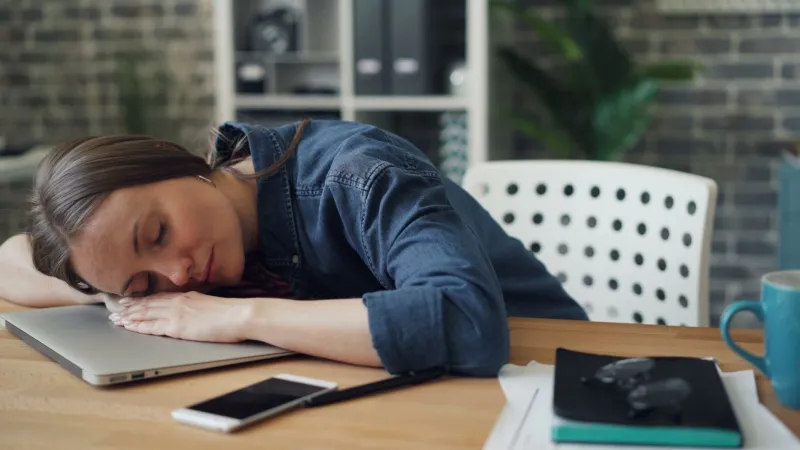
There's a specific kind of energy that fills every coffee shop in every major American city right now. It's not focus. It's not creativity. It's the very deliberate, very visible performance of being completely, utterly spent. Laptop open. Seventeen tabs. Cold oat milk latte abandoned somewhere around the second hour. Eyes slightly glazed but never fully closed. This is the aesthetic of importance. And people are chasing it on purpose.
We've entered a strange cultural moment where the most coveted thing you can signal isn't wealth, health, or happiness — it's that you simply do not have a single free minute. "I'm slammed" has replaced "I'm doing great" as the default answer to how are you? And somehow, we all just nodded and let that happen.
The Humble Brag Got a Rebrand
The old-school humble brag was subtle. You'd mention your vacation to Tuscany while pretending to complain about the flight. Now it's blunter. The new version sounds like: "I haven't slept properly in three weeks," "I literally forgot to eat yesterday," "I don't even know what day it is." These aren't confessions. They're credentials.
There's an implicit status code embedded in all of it. If you're exhausted, you must be important. Important people have demands on their time. Demands mean you're needed. Needed means you matter. The logic is messy, but the cultural math somehow adds up — at least in the circles where this performance is most valued.
High-achieving professionals, founders, creators, and influencers have all quietly adopted exhaustion as part of their personal brand. The dark circles aren't concealed; they're context. The "sorry for the late reply" emails arrive at 1 a.m. not because the sender had no choice, but because they want you to see the timestamp.
Rest Culture and the Irony of Being Too Busy to Rest
Here's where it gets genuinely weird. The same cultural moment producing the Exhaustion Economy also produced the wellness industrial complex. Sleep optimization. Nervous system regulation. Cortisol-aware morning routines. Magnesium supplements marketed like they're going to save your life. There is an entire industry — worth billions — built on the premise that Americans are fried and need to heal.
And yet. The people most loudly engaged in rest culture are also the ones posting their 5 a.m. cold plunges before a twelve-hour workday. The "I had to set boundaries" crowd is somehow also the "I have three side projects" crowd. Rest became another item on the productivity list, which is exactly how it stopped being rest.
The paradox is almost too on-the-nose. We talk about burnout constantly, write newsletters about it, build apps to track it — and then wear it like a badge at every dinner party. Real recovery happens quietly, privately, without an audience. The performed version happens in your Instagram stories with a caption about "finally honoring my capacity." One of these is rest. The other is content.
The Geography of Being Slammed
This phenomenon has a very specific zip code. It lives in New York, LA, Austin, and any city with a density of people who work in tech, media, finance, or what's broadly called "the creative industry." It thrives at co-working spaces, on LinkedIn, in group chats where someone always responds at midnight.
But it's also migrated online in a way that's made it accessible — and aspirational — to a much wider audience. The overworked founder aesthetic has trickled down into creator culture, where being "booked and busy" is shorthand for success, even when the actual bookings are a brand deal for a supplement company and three Zoom calls. The aesthetic of exhaustion democratized itself while keeping its status implications fully intact.
What's interesting is that the people who are actually most exhausted — hourly workers, caregivers, people working two jobs to keep the lights on — are almost never the ones performing it. The Exhaustion Economy is, at its core, a luxury product. You have to have a certain kind of life to make your tiredness look glamorous.
What We're Actually Saying When We Say We're Slammed
Peel back the performance and there's something more complicated underneath. A lot of the exhaustion signaling is really anxiety signaling — a way of communicating I am not falling behind in a culture that has made falling behind feel catastrophic. Saying you're slammed is protective. It means you're in the game. It means you haven't checked out or given up or — worst of all — slowed down voluntarily.
There's also a community function to it. Shared exhaustion is a bonding ritual. "We're all in this together" lands differently when this is a brutal work sprint or a chaotic launch week. Misery loves company, but in 2025, it also loves an audience and a comment section full of "same, honestly."
And then there's the identity piece. For a generation that was told to build careers out of their passions, the line between work and self got blurry a long time ago. If your work is your identity, your exhaustion from work becomes proof of how seriously you take yourself. Burnout becomes devotion. The grind becomes the gospel.
The Cost of the Costume
None of this is free. Performing exhaustion long enough tends to produce actual exhaustion, which is the kind that doesn't make good content and doesn't feel aspirational at all. The cosplay eventually catches up with the body. The anxiety underneath the aesthetic becomes harder to manage. The timestamp on the 1 a.m. email stops feeling like a flex and starts feeling like a symptom.
The more interesting cultural move right now isn't to perform rest as an antidote to performed exhaustion — that's just swapping one costume for another. It's to actually opt out of the visibility game entirely. To be neither slammed nor mindfully restored for public consumption. To just be a person with a variable, unremarkable, honest relationship to your own energy levels.
That's genuinely radical. And it doesn't photograph well at all.
Which might be exactly the point.