Ride or Die: How Staying Put Became the Coolest Move You Can Make
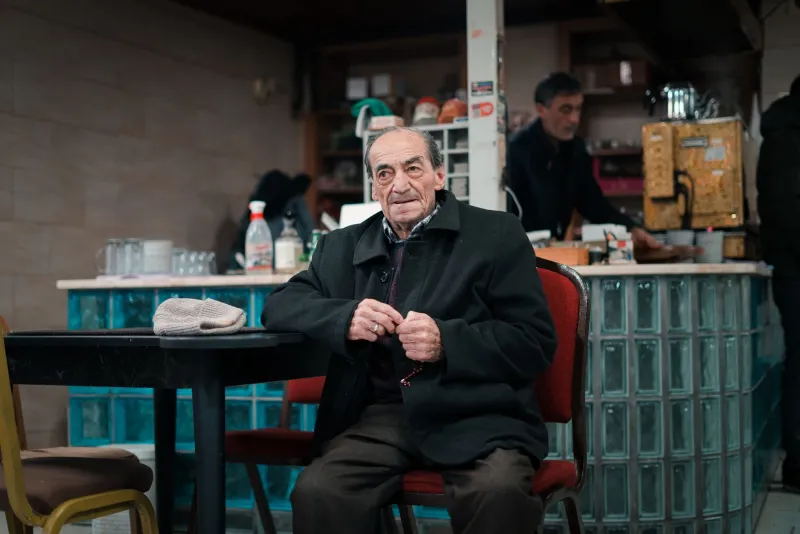
There's a guy in every city who has been going to the same barbershop for eleven years. Same barber, same Saturday morning slot, same mediocre coffee from the bodega next door. He doesn't post about it. He doesn't make it a personality. He just goes. And somehow, without trying, he is the most interesting person you know.
We spent the better part of a decade worshipping at the altar of the pivot. The rebrand. The era. The "I've evolved" caption posted six weeks after the last one. Social media built an entire economy around the performance of reinvention — and we bought in, hard. New aesthetic every season, new obsession every quarter, new friend group every time the last one got complicated. Novelty wasn't just fun. It was currency.
But something is shifting. Quietly, without a trend report or a think piece announcing it, commitment is having a moment. Not the performative kind. The real kind.
The Exhaustion Nobody's Talking About
Here's the thing about constantly chasing new: it's genuinely tiring. And not in the cute, humble-brag "I'm so busy" way — in the hollow, what-am-I-even-doing way. The dopamine hit from discovering a new brand, a new show, a new scene gets shorter every time. The algorithm keeps serving up fresh content, fresh aesthetics, fresh takes, and at some point the scroll stops feeling like exploration and starts feeling like a treadmill.
Psychologists have a name for this: option overload. The more choices you have, the less satisfied you are with any of them. Barry Schwartz wrote about it back in 2004, but it hits differently now that your entire life — your wardrobe, your social circle, your hobbies, your identity — is technically up for reconsideration at any moment. When everything is a choice, nothing feels chosen.
Commitment, it turns out, is a form of relief.
What Loyalty Actually Signals
When someone has been wearing the same watch brand for fifteen years, or listening to the same three albums on every road trip, or ordering the exact same thing at their neighborhood spot without looking at the menu — that's not laziness. That's self-knowledge. And self-knowledge is genuinely rare.
Think about the friends in your life who are constantly in flux — new passion project, new philosophy, new look. There's energy there, sure. But there's also a kind of opacity. You can't quite get a read on them because they keep moving the target. Now think about the ones who have been the same person, more or less, for as long as you've known them. You know what they value. You know what they'll say. There's something deeply grounding about that. Something, honestly, kind of luxurious.
Staying with something unpopular — an unfashionable brand, a niche hobby, a friendship that requires actual effort — signals a confidence that trending things simply can't. It says: I know what I like. I don't need your validation to keep liking it.
The Anti-Era Era
The "era" concept — "I'm in my villain era," "hot girl era," "soft life era" — was fun for about five minutes before it became its own kind of trap. Framing your life in seasons implies that whatever you're doing right now is temporary, already pre-loaded with an exit ramp. It's commitment-phobia dressed up as self-awareness.
The counter-move is quieter and harder to photograph. It's the person who has been into vintage Japanese ceramics since 2016 and doesn't feel the need to explain why. The woman who has worn the same signature fragrance for a decade because she decided, once, that it was hers. The guy who still plays in the same recreational basketball league he joined at 24, even though some of those guys are now kind of annoying.
There's no aesthetic shorthand for this. No capsule wardrobe version. It's just the accumulation of time and the refusal to be embarrassed by it.
Loyalty as a Flex Nobody Saw Coming
Here's where it gets interesting: in markets saturated with options, loyalty has become genuinely hard to come by — which means it's become genuinely valuable. Brands know this. That's why heritage labels lean so hard into their archives. That's why the most coveted restaurant reservation in any major city isn't the new opening — it's the place that's been there for thirty years and still has a three-week wait.
Longevity implies quality. Not just of the product or the place, but of the person choosing it. If you've been going to the same coffee shop since before oat milk was a thing, you're not behind the curve. You found something worth keeping and you kept it. That's a whole different kind of taste.
The same logic applies to people. The most trusted people in any room aren't the ones with the widest network or the most impressive range of interests. They're the ones who have been showing up for the same people, in the same ways, for a long time. Reliability isn't boring. It's rare. And rare things have value.
The Difference Between Stuck and Rooted
None of this is an argument for stagnation. There's a real difference between being stuck — clinging to something out of fear, refusing to grow — and being rooted. Rooted people grow. They just grow from a fixed point, which means they actually go somewhere instead of just moving.
The person who has been painting watercolors for eight years isn't the same painter they were at year one. The couple who has been together long enough to be genuinely boring to everyone else has built something that novelty-seekers will spend decades trying to find. The collector who has been focused on one specific niche for years has a depth of knowledge that no algorithm can replicate.
Commitment compounds. That's the part that doesn't make the highlight reel.
The Quiet Confidence of Not Needing a New Thing
There's a particular kind of calm that comes off people who have their thing and aren't looking for another one. You notice it at parties, at work, online — though they're usually not performing it online, which is kind of the point. They're not broadcasting their loyalty. They're just living it.
In a culture that has spent years rewarding the performance of discovery, the person who already knows what they love and doesn't need to announce it is quietly, almost aggressively, confident. They've opted out of the game. Not because they lost, but because they stopped finding it interesting.
And somehow, that is the most compelling thing in the room.
So keep your eras. Keep your pivots. But maybe hold onto one thing long enough to really know it. Long enough to be embarrassed by it and keep going anyway. Long enough for it to actually mean something.
That's the flex nobody's figured out how to trend-cycle yet.